
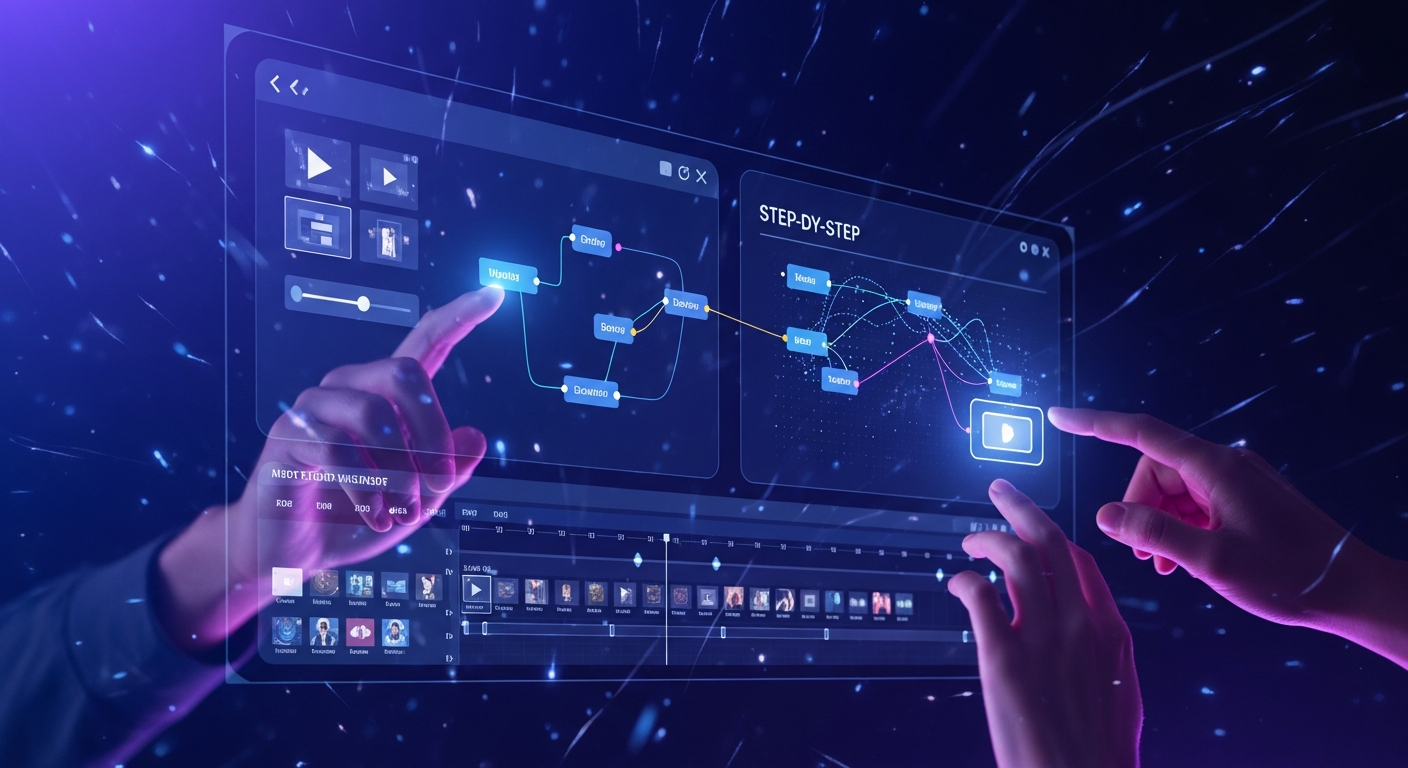
How to Use Grok Video Maker#
If you want the shortest path from prompt to clip, Grok Video Maker is designed for a simple workflow. Start with a text prompt, add references when the shot needs more control, and refine until the motion feels right.
Step 1: Start with the shot#
Write one clear prompt for the scene you want. Good prompts usually name:
the subject
the motion
the camera feel
the visual style
For example, instead of "a city at night," try "a neon-lit street in the rain, slow camera push-in, cinematic reflections, handheld feel."
Step 2: Add references if needed#
When the prompt is not enough, add reference images. This helps lock the subject, style, or composition before generation. If your shot needs a beginning and ending anchor, use first-last frame control to shape the motion arc more precisely.
Step 3: Include audio when the idea depends on sound#
Some clips feel better when the audio stays in the workflow. Native audio is useful for rhythm-driven edits, ad concepts, and short social clips where pacing matters as much as the visuals.
Step 4: Iterate#
The first output is usually a draft. Change one thing at a time:
shorten or expand the prompt
adjust the motion direction
swap the reference image
tighten the first and last frame
That makes it easier to see what actually changed and what improved the result.
When to use Grok Video Maker#
Grok works best when you want a compact workflow that blends prompt control, reference support, and audio-aware generation in one place.
If you want the main page that owns the primary keyword, read the canonical guide here: Grok AI Video Generator.